AI Inside the Model: Copilots, Text-to-BIM and Automated Checking
AI on the jobsite gets the headlines, but the quieter revolution is happening inside the authoring tools — generative layouts, text-to-BIM, auto-detailing and model QA.
Most conversations about AI in construction point at the jobsite — cameras spotting hazards, drones tracking progress. That is real, but it overlooks a quieter shift that may matter more to designers and BIM teams: AI is moving inside the authoring tools, into the act of modelling itself. The model is starting to help build and check itself.
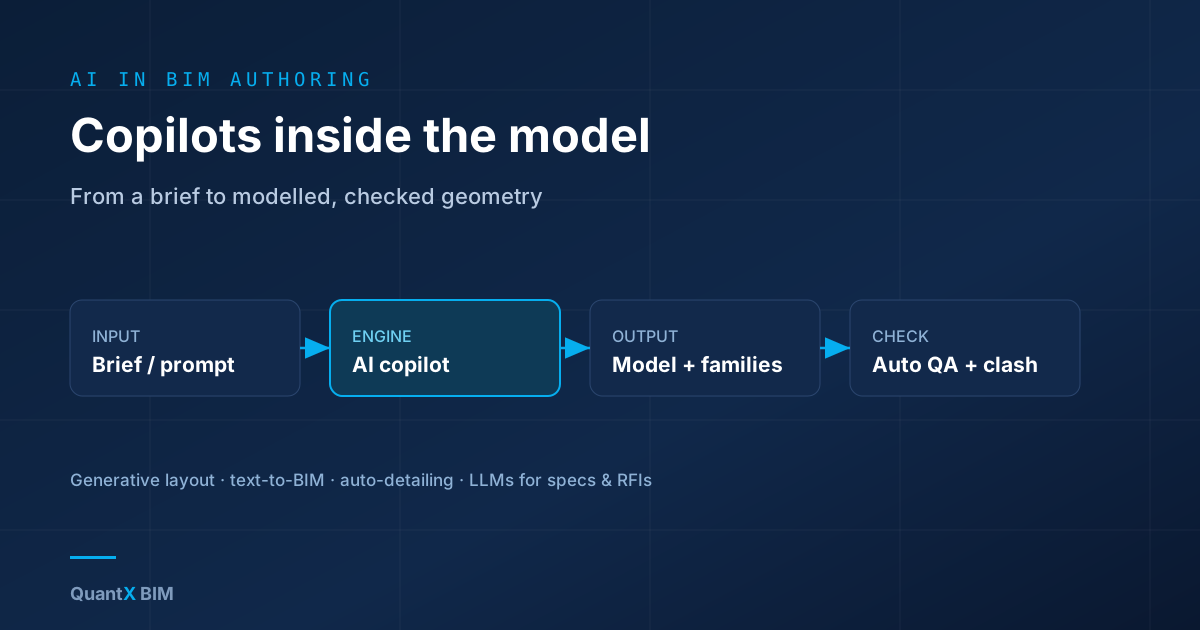
Four Places AI Is Landing in Authoring
- Generative and options design. Given a site, a programme and constraints, tools can now produce and rank many massing or layout options in minutes — surfacing trade-offs a human would take days to explore.
- Text- and image-to-model. Early copilots turn a written brief or a sketch into a first-pass model or family, collapsing the blank-canvas stage.
- Auto-detailing and repetitive work. Placing dimensions, tagging, laying out reinforcement or generating typical details — the tedious, rules-based work that consumes hours — is increasingly automatable.
- Model QA and clash prediction. Machine learning can flag likely errors, missing data and probable clashes earlier than a scheduled coordination review, turning checking from a periodic event into a continuous one.
What It Does and Does Not Change
It is easy to over- or under-read this. AI copilots are genuinely good at breadth, speed and drudgery: exploring options, drafting a starting point, doing repetitive work without fatigue. They are not good at judgement, accountability or context that was never written down. A generated layout still needs an engineer to decide whether it is right, and a flagged clash still needs a human to resolve the real-world trade-off.
The productive stance is to treat these tools as a fast, tireless junior: give them the well-defined work, review everything, and reinvest the saved hours in the decisions only experienced people can make.
Getting Value Without Getting Burned
Start where the work is repetitive and the output is easy to verify — detailing, tagging, first-pass options, and automated model checks against your standards. Keep a human in the loop on anything that carries engineering or contractual weight, and be deliberate about data: AI in authoring is only as good as the model conventions and information requirements it learns from. The firms that win here will not be the ones that adopt the flashiest tool, but the ones that redesign their workflow so people spend less time modelling and more time deciding.
References
- Information Delivery Specification (IDS) — buildingSMART International
- AI Risk Management Framework — NIST
- buildingSMART Data Dictionary (bSDD) — buildingSMART International
- ISO 29481-1:2016 — Building information models — Information delivery manual, Part 1: Methodology and format — ISO