When the Model Checks the Rules: Automated Compliance and e-Permitting
Building codes are rules; BIM models are structured data. Bringing the two together lets software check compliance and even issue permits — and it is already happening.
Building regulations are, at heart, a large set of rules: minimum widths, fire ratings, accessibility clearances, egress distances. A BIM model is structured data describing exactly those properties. Put the two together and an obvious question follows — why is a human still checking a model against a code line by line? Automated compliance checking answers it, and it is moving from research demo to working reality.
How Rule-Based Checking Works
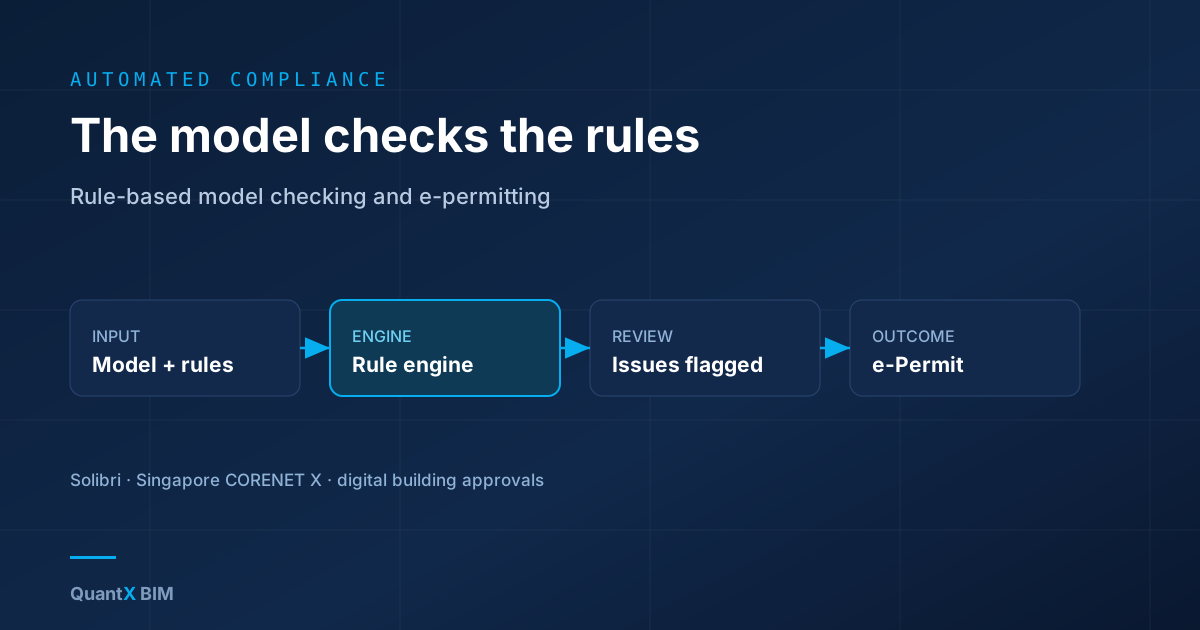
The approach is straightforward in principle. Codified rules are expressed in a form software can evaluate; the model provides the geometry and properties; a rule engine checks each relevant object and reports where the design does not comply. Tools like Solibri have offered model-based rule checking for years; what is new is the ambition to connect this directly to statutory approval, so the model itself becomes the submission.
e-Permitting Goes Live
The most striking example is Singapore, whose CORENET X initiative is building a workflow where designs are submitted and checked digitally against regulations rather than as flat drawings reviewed by hand. The prize is enormous: faster, more consistent approvals, fewer late surprises, and a feedback loop that lets designers self-check long before formal submission. Many jurisdictions — including a rapidly digitising India, where building-plan approval systems are increasingly online — are moving in the same direction, if not yet at the same depth.
The Honest Limitations
- Not every rule is computable. Prescriptive, measurable requirements automate well; performance-based or judgement-heavy provisions resist it.
- Garbage in, garbage out. Automated checks are only as trustworthy as the model's data and classification — a wrongly typed object passes or fails for the wrong reason.
- Codification is hard. Turning legal text into unambiguous machine rules is genuine work, and regulations change.
What to Do Now
Even before your jurisdiction offers full e-permitting, the discipline pays off: model to a clean, well-classified standard, and run internal rule checks on the things that most often cause rejection — accessibility, egress, clearances. Teams that already self-check against codified rules will submit cleaner designs and adapt fastest as approvals go digital. The direction is unmistakable: the drawing set reviewed by a person is giving way to the model checked by a machine, with people freed to focus on the judgement that codes can never fully capture.
References
- CORENET X — Building and Construction Authority, Singapore
- Building Plan submission — Building and Construction Authority, Singapore
- Information Delivery Specification (IDS) — buildingSMART International
- National Building Code of India — Bureau of Indian Standards
- buildingSMART Data Dictionary (bSDD) — buildingSMART International