BIM for Infrastructure: Roads, Rail, Metro and Bridges
Vertical buildings taught the industry BIM; infrastructure is where the next decade of value sits — especially in India. Here is how BIM works for linear assets.
Ask most people to picture a BIM model and they will imagine a building — floors, columns, an MEP tangle in the ceiling. Yet some of the largest and most complex projects on earth are not buildings at all. They are highways, metro lines, high-speed rail corridors, bridges and tunnels. Infrastructure BIM is where a great deal of the industry's coming value sits, and it works differently enough to deserve its own attention.
Linear, Not Room-Based
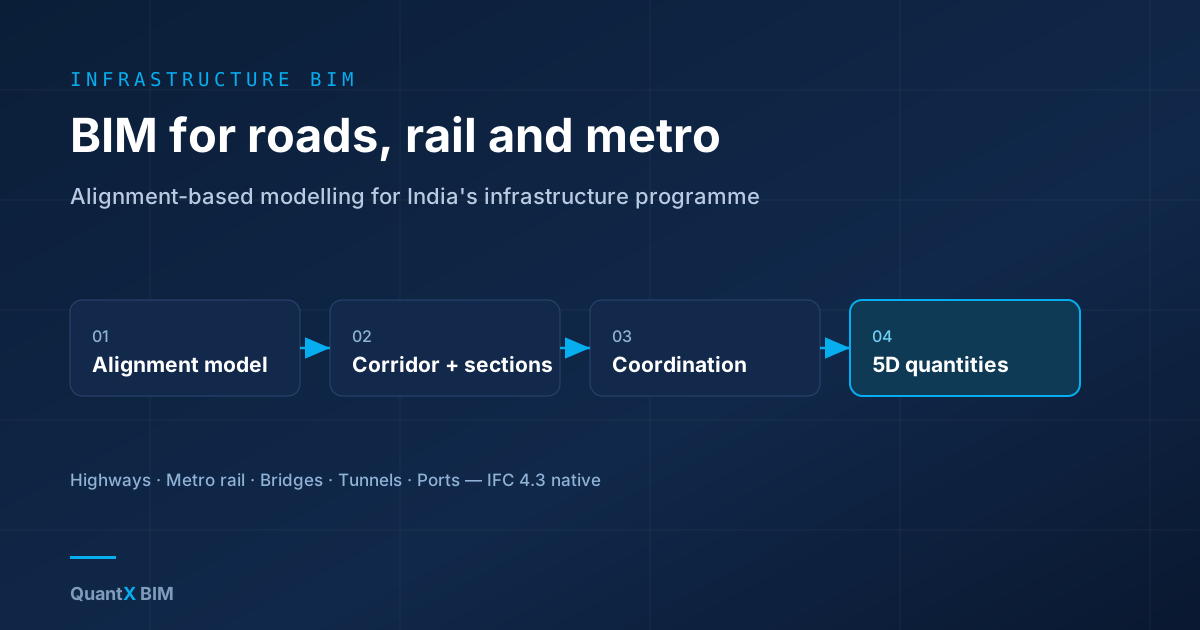
Buildings are organised around spaces and storeys. Infrastructure is organised around an alignment — a horizontal and vertical centreline that a road or railway follows for kilometres. Design happens relative to chainage along that line: corridors, cross-sections, superelevation, earthworks and drainage all reference it. This is why infrastructure modelling needs tools and schemas built for alignment rather than rooms, and why the arrival of IFC 4.3 — which finally standardises alignment-based geometry in openBIM — is such a milestone.
What Changes in Practice
- Scale and terrain. Models span kilometres and sit on real survey data, so reality capture, GIS context and coordinate systems matter far more than on a single building plot.
- Discipline mix. Alignment, structures, geotechnical, drainage, systems and utilities must federate cleanly — clash detection here is as much about existing services as new design.
- Quantities drive everything. Earthwork volumes and material takeoffs are the commercial heart of an infrastructure job; a model that prices itself (5D) is worth enormous sums when volumes are measured in millions of cubic metres.
The India Opportunity
Few markets show the infrastructure case as clearly as India. Expressway programmes, a fast-growing metro-rail network across dozens of cities, dedicated freight and high-speed rail corridors, and large port and airport works all demand coordinated delivery at a scale where small percentage improvements translate into very large numbers. As public clients begin to write BIM into their requirements, contractors and consultants who can model, coordinate and quantify linear assets — not just buildings — will have a genuine edge.
Getting Started
Firms moving into infrastructure BIM should invest first in the fundamentals that linear projects punish hardest: disciplined coordinate systems, reliable survey and reality-capture data, alignment-capable authoring tools, and federation workflows that bring civil, structural and systems models together. The reward is not just fewer clashes but a model that carries dependable quantities from design to site. Buildings taught the industry BIM; infrastructure is where that discipline now pays its largest dividends.
References
- IFC Schema Specifications — buildingSMART International
- ISO 16739-1:2024 — Industry Foundation Classes (IFC) for data sharing, Part 1: Data schema — ISO
- ISO 19650-2:2018 — Information management using BIM, Part 2: Delivery phase of the assets — ISO
- CityGML Standard — Open Geospatial Consortium
- Construction Industry Development Council — Construction Industry Development Council