Cloud-Native BIM and the Death of the File
A generation of BIM was organised around desktop files. A new wave of cloud-native, data-centric platforms is quietly ending that era. Here is what the shift means.
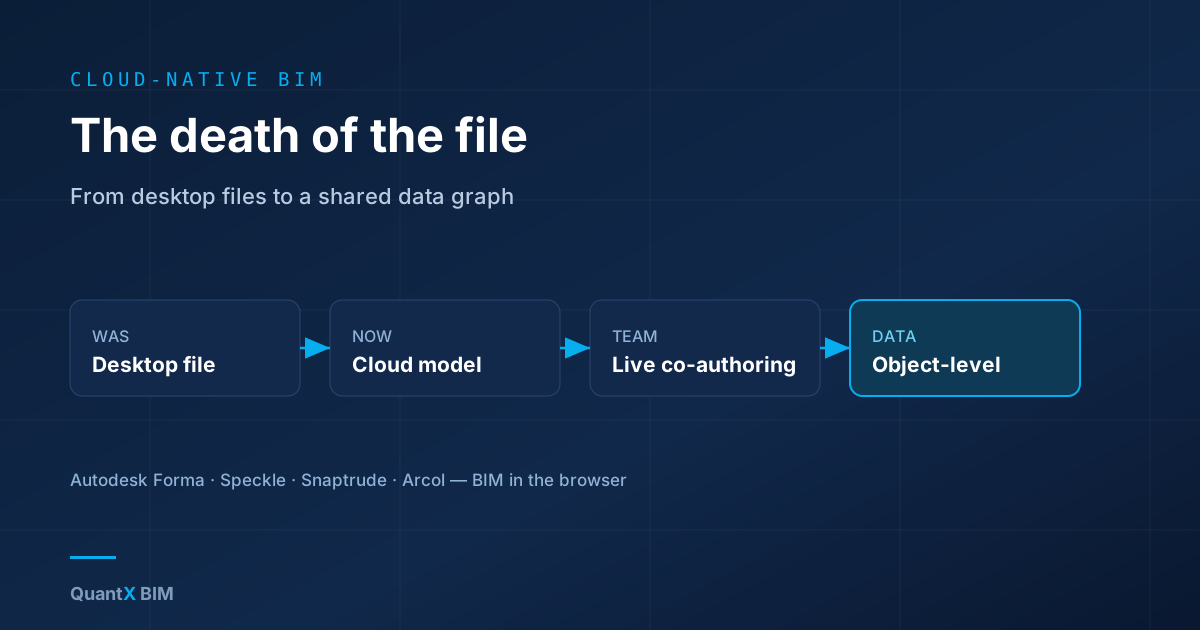
For twenty years, BIM has been organised around a file. Someone owned the model, checked it out, worked on it, and issued a copy. Coordination meant swapping files; interoperability meant exporting them. It worked, but it built a whole industry of version confusion, broken links and "which file is current?" A newer generation of tools is quietly dismantling that model, and the shift from file to cloud is one of the most important structural changes in BIM.
What "Cloud-Native" Really Means
This is more than storing a Revit file in the cloud. Cloud-native BIM platforms treat the model as live, shared data rather than a document. Several people edit the same model at once, in a browser, with changes reconciled continuously — the way modern documents and design tools already work. Underneath, the model is increasingly object- and data-centric: you can query a single element or property without opening a monolithic file, and connect the data to dashboards, checks and downstream tools.
The Platforms Driving It
The movement spans incumbents and newcomers. Autodesk's cloud environment and its Forma platform push authoring toward the browser; open-source projects such as Speckle act as a neutral data layer that moves granular BIM data between tools like version control for design; and a wave of startups — Snaptrude, Arcol and others — are building BIM authoring that is cloud-first by design. What they share is a rejection of the file as the unit of collaboration.
Why It Matters
- Coordination becomes continuous. If everyone works on the same live model, "clashing the latest files" starts to look like a workaround for a problem cloud tools remove.
- Data outlives the tool. When information is granular and connectable, it can feed estimating, analysis and operations without a brittle export every time.
- Access widens. Browser-based tools lower the hardware and licensing barrier that kept many collaborators out of the model entirely.
The Cautions
None of this is free of trade-offs. Cloud dependence raises real questions about connectivity, data ownership, security and long-term archiving — a project's information must remain accessible for decades, long after any single vendor's platform. The pragmatic path is to embrace cloud collaboration while insisting on open, exportable data (openBIM and IFC remain the insurance policy) so the convenience of the cloud never becomes a lock-in you cannot leave. The file is not quite dead — but it is no longer the centre of gravity, and workflows built around it will feel the change.
References
- ISO 19650-1:2018 — Information management using BIM, Part 1: Concepts and principles — ISO
- ISO 19650-2:2018 — Information management using BIM, Part 2: Delivery phase of the assets — ISO
- BIM Collaboration Format (BCF) — buildingSMART International
- openBIM — buildingSMART International
- Industry Foundation Classes (IFC) — buildingSMART International